Monsoon AC Care in Surat: How to Prevent Foul Smells and Water Leaks
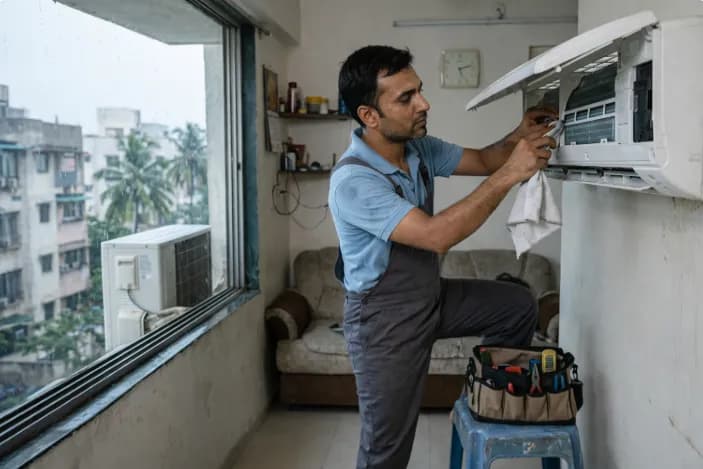
Don’t Let the Monsoon Damage Your AC
The monsoon season in Surat brings relief from extreme summer heat, but it also increases humidity levels inside your home. Excess moisture in the air can create problems inside your AC system, leading to foul smells, water leakage, and reduced cooling performance.
Here are practical steps you can take to keep your AC safe and efficient during the rainy season.
1. Getting a “Wet Socks” or Musty Smell?
If your AC smells bad when you switch it on, moisture has likely caused mold and bacteria to grow on the cooling coil or blower.
During monsoon, this problem becomes very common in Surat homes.
A professional deep cleaning using a jet pump machine removes dirt, mold, and bacteria from the evaporator coil properly. Surface cleaning is not enough in this season.
If the smell continues for several days, it is better to schedule a proper inspection.
2. Check the Drain Pipe Before It Leaks
High humidity means your AC removes more moisture from the air. That water flows through a small drain pipe.
During monsoon, dust mixes with moisture and forms mud inside the pipe. This can block drainage and cause water leakage from the indoor unit.
If you notice:
-
Water dripping from the AC
-
Damp walls near the unit
-
Ceiling stains
Stop using the AC and get it checked immediately to prevent wall or ceiling damage.
3. Use “Dry Mode” on Humid Days
Most AC remotes have a Dry Mode (water drop icon).
This mode removes excess humidity without overcooling the room. It is very useful during Surat’s humid monsoon days when the temperature is not too high but the air feels sticky.
Using Dry Mode:
-
Improves comfort
-
Reduces moisture buildup
-
Prevents mold growth inside the unit
4. Protect the Outdoor Unit
Outdoor units are built for rain, but heavy winds during monsoon can blow plastic, leaves, or debris into the fan area.
Blocked airflow can overheat the compressor or damage the fan motor.
Check occasionally to ensure:
-
No plastic or trash is stuck
-
No water is collecting around the base
-
The unit has proper airflow
5. Be Careful of Voltage Fluctuations
Monsoon in Surat often brings power fluctuations.
Sudden voltage changes can damage the AC’s PCB board, which is one of the most expensive components to replace.
Using a proper stabilizer or surge protector can prevent costly electrical damage during storms.
Keep Your Home Fresh This Monsoon
Monsoon AC problems usually start small and become expensive if ignored. A timely inspection can prevent water damage, bad odors, and major repairs.
If your AC is showing signs of leakage, smell, or reduced cooling, it is better to address it early.
Call or WhatsApp 8866665005 to schedule a Monsoon AC Health Check in Surat.